
Flag Football Coverages: Complete Guide to Man, Cover 1, Cover 2, Cover 3, and Zone Defense
Great flag football defense starts with great coverage. It is not enough to just have fast players who can chase flags. Your defenders need to understand spacing, leverage, communication, zone drops, and how to react when the quarterback extends the play. Below are the best flag football coverages.
Whether you are coaching 5v5, 6v6, or 7v7 flag football, having a clear coverage system gives your defense answers. The goal is simple: take away easy throws, force the quarterback to hold the ball, and make offenses work for every completion.
This guide breaks down the most common flag football coverages, including man coverage, Cover 1, Cover 2 zone, Cover 3 zone, and how to replace the rusher when your defense brings pressure.
Why Coverage Matters in Flag Football
Flag football is a space game. Offenses are trying to create quick separation, stretch the field horizontally, and find open grass. If your defenders do not understand coverage rules, receivers will run free and quarterbacks will get easy throws.
Good coverage helps your defense:
-Force tighter throwing windows.
-Take away quick completions.
-Limit explosive plays.
-Make quarterbacks hold the ball longer.
-Help your rusher get home.
-Create interceptions and bad throws.
-Keep defenders organized after the snap.
The best defenses do not just run around. They communicate, understand leverage, and play with discipline.
The Biggest Rule of Flag Football Coverage
Cover Grass, Not Just Players
This is one of the most important coaching points in flag football.
Too many defenders chase receivers without understanding space. Good offenses will use crossing routes, floods, bunch sets, stacks, and motion to create confusion. If your defenders only chase, they will get picked, rubbed, or pulled out of position.
Teach your players to understand:
Where is my help?
What area am I responsible for?
Where does the quarterback want to throw?
What route is entering my zone?
Where is the biggest threat?
What changes when the QB rolls out?
Great defenders defend space, leverage, and route combinations.
See Also: Flag Pulling Techniques
Man Coverage in Flag Football
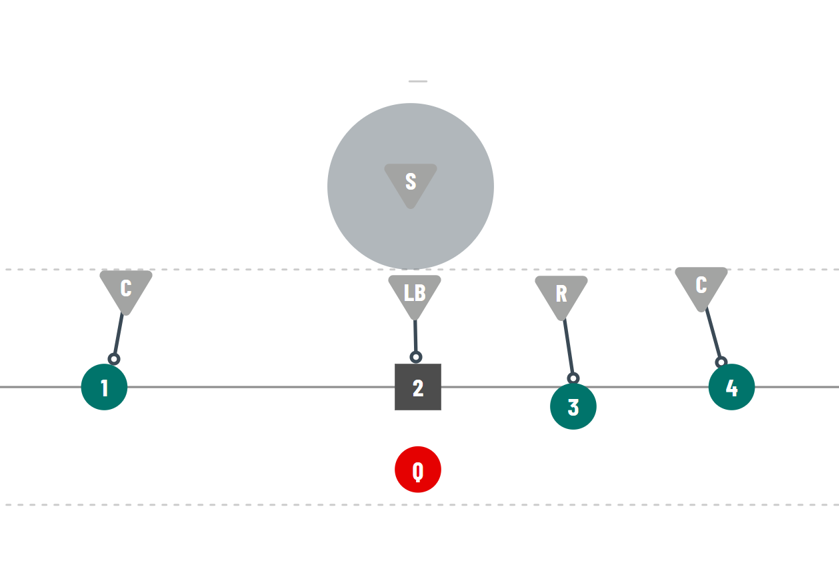
Man coverage means each defender is responsible for a specific receiver. Wherever that receiver goes, the defender follows.
Man coverage can be very effective in flag football because it is simple to teach and allows your players to play aggressively. It is especially useful when you have athletes who can match up well and stay tight in coverage.
Strengths of Man Coverage
Easy for players to understand
Good against quick throws when defenders play tight
Works well with pressure
Limits free access throws
Allows defenders to be aggressive
Simple to adjust against different formations
Weaknesses of Man Coverage
Can struggle against crossing routes
Can get beat by rubs and picks
Harder to defend stacked or bunch formations
Defenders can lose leverage if they chase too much
Mobile QBs can create scramble problems
One missed flag can turn into a big play
Man Coverage Coaching Points
1. Play With Inside Leverage
Most flag football throws happen inside: slants, drags, seams, posts, and quick crossers. Teach defenders to take away the inside release first.
Make the receiver work outside and throw into a tougher window.
2. Stay Hip-to-Hip
Defenders should not chase from behind. They need to stay connected to the receiver’s hip and maintain good body position.
The goal is to stay close enough to make the throw difficult and pull the flag immediately after the catch.
3. Do Not Stare at the QB
In man coverage, defenders must keep their eyes on their assignment. If they stare at the quarterback too long, they will lose the receiver.
Eyes on the receiver. React when the ball is thrown.
4. Communicate Picks and Crossers
Against bunch, stack, and crossing routes, defenders must talk. Call out “pick,” “under,” “over,” or “switch” when routes cross.
Man coverage fails when defenders do not communicate.
Cover 1: Man Coverage With a Safety
Cover 1 is man coverage with one deep safety helping over the top.
This is a great coverage for flag football because it allows your underneath defenders to play man while still having protection against deep shots.
How Cover 1 Works
Most defenders match up man-to-man. One defender plays deep middle safety. The safety is responsible for helping on deep routes, reading the quarterback, and preventing the big play.
Why Cover 1 Works
It gives your defense man coverage underneath with help over the top. This is helpful against teams that like to throw deep, run double moves, or attack the middle of the field.
Cover 1 is also strong when paired with a rusher because the quarterback has to throw quickly while defenders are tight in coverage.
Cover 1 Coaching Points:
Safety Must Stay Deep
The safety cannot get nosy and jump short routes too early. Their job is to prevent the deep ball first.
Man Defenders Must Stay Tight
Underneath defenders should play aggressively because they know they have help deep.
Force the Ball Outside
Inside throws are dangerous. Defenders should use leverage to force receivers toward the sideline.
Safety Reads the QB
The safety should read the quarterback’s eyes and shoulders, but not overreact to every pump fake.
See Also: Flag Football Rusher Tips
Cover 2 Zone in Flag Football
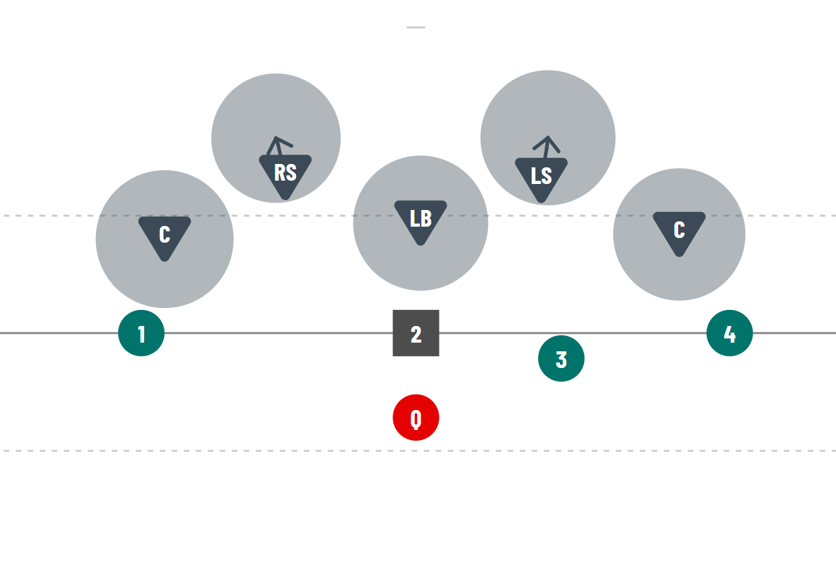
Cover 2 is a zone coverage with two deep defenders splitting the field in half. Underneath defenders cover the short and intermediate zones. For 5v5 Cover 2 Zone is one of the best flag football coverages.
Cover 2 is a great coverage against teams that like quick throws, flats, hitches, outs, and short crossing routes.
How Cover 2 Works
Two defenders are responsible for the deep halves of the field. The underneath defenders drop into zones and protect the flats, hooks, and middle windows.
Strengths of Cover 2
Strong against short passing games
Good sideline protection
Helps defend quick outs and flats
Keeps two defenders deep
Good against balanced formations
Can bait quarterbacks into tight throws
Weaknesses of Cover 2
Can be attacked down the middle
Can be stretched vertically
The hole between the safeties can open
Deep sideline throws can stress the safeties
Underneath defenders must drop with discipline
Cover 2 Coaching Points
1. Safeties Must Stay Wider Than the Deep Threats
The deep defenders are responsible for keeping the ball in front and protecting their half of the field. They cannot let receivers get behind them.
2. Protect the Middle Hole
The biggest weakness in Cover 2 is often the middle of the field between the two deep defenders. Your underneath middle defender must carry vertical routes and help close that window.
3. Flat Defenders Must React Fast
If the offense throws quickly to the flat, the flat defender must trigger downhill and pull the flag.
4. Do Not Drop Too Deep Underneath
A common mistake is underneath defenders dropping too far and leaving easy short throws open. Zone defenders should get depth, but they must still defend the sticks and react to quick routes.
Cover 3 Zone in Flag Football
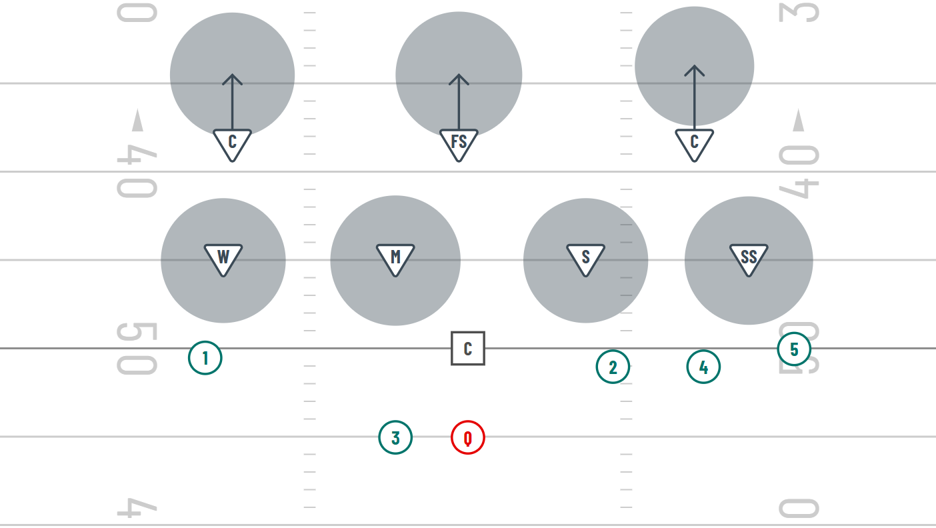
Cover 3 is a zone coverage with three deep defenders splitting the field into thirds. The underneath defenders cover the short zones.
Cover 3 is one of the best flag football coverages for preventing big plays and defending vertical passing concepts.
How Cover 3 Works
Three defenders drop deep: left third, middle third, and right third. Underneath defenders cover flats, hooks, curls, and short crossing routes.
Strengths of Cover 3
Strong against deep passes
Good against vertical routes
Helps defend the entire width of the field
Works well against trips and spread formations
Can keep everything in front
Good for protecting a lead
Weaknesses of Cover 3
Can give up quick underneath throws
Flat areas can be stressed
Short outs and hitches can be open
Flood concepts can overload one side
Requires defenders to understand spacing
Cover 3 Coaching Points
1. Deep Defenders Must Not Get Beat Over the Top
The number one rule in Cover 3 is simple: do not let anyone behind you.
2. Underneath Defenders Must Wall Inside Routes
If receivers run shallow crosses, seams, or inside routes, underneath defenders must collision space and make those throws difficult.
3. Rally to the Flag
Cover 3 may give up short throws. That is okay if your defenders rally quickly and pull flags.
4. Communicate Flood Concepts
Offenses love to attack Cover 3 with flood routes: one deep, one intermediate, and one short route to the same side.
Defenders must communicate route levels and avoid chasing the same receiver.
Zone Dropping to Replace the Rusher
This is one of the most important flag football defensive concepts.
When you send a rusher, the offense will often try to throw into the space the rusher left. Smart offenses teach receivers to “replace the blitzer” with a quick route.
Your defense needs an answer.
What Does “Replace the Rusher” Mean?
When a defender rushes the quarterback, they vacate an area of the field. The offense may send a receiver into that empty space for a quick throw.
If your defense does not replace that space, the QB gets an easy hot read.
How to Coach Zone Dropping Behind Pressure
When one defender rushes, another defender must understand that they may need to drop into or squeeze the area the rusher left.
This does not mean they abandon their whole responsibility. It means they must be aware of the hot window.
Coaching Points for Replacing the Rusher
1. Know Where the Rush Came From
If the rusher comes from the right side, the defense must expect the offense to attack that right-side hot area.
2. Look for the Quick Route
Expect slants, drags, speed outs, hitches, and quick sits behind the blitz.
3. Do Not Turn Your Back to the QB
Zone defenders should keep vision on the quarterback so they can break on quick throws.
4. Squeeze the Hot Window
The defender replacing the rusher should tighten the throwing lane and make the QB hesitate.
5. Rally After the Catch
Even if the ball is completed, the defender should be close enough to pull the flag immediately.
This is how you blitz without giving up easy completions.
Match Coverage: A Great Flag Football Adjustment
Match coverage is a blend of man and zone. Defenders start in zone, but match receivers once they enter their area.
This is a great option for more advanced teams because it helps defend route combinations better than basic zone.
Common Flag Football Coverage Mistakes
Defenders Chase Instead of Covering Space
This creates wide-open windows for the offense.
Safeties Get Too Shallow
If deep defenders get nosy, offenses will hit big plays over the top.
No Communication
Coverage breaks down fast when defenders do not talk through motion, bunch, stack, and crossing routes.
Poor Leverage
Defenders must understand whether they have inside help, outside help, deep help, or no help.
Zone Defenders Stand Still
Zone coverage does not mean standing in one spot. Defenders must move with the QB’s eyes, route threats, and offensive spacing.
Nobody Replaces the Rusher
If you blitz and do not cover the hot window, the offense will get easy completions.
Final Coaching Point
Flag football coverage is about more than calling man or zone. It is about teaching your players how to defend space, understand leverage, communicate, and adjust when the offense creates conflict.
Man coverage gives you aggression. Cover 1 gives you pressure with deep help. Cover 2 protects the flats and short passing game. Cover 3 protects against explosive plays. Zone dropping behind the rusher takes away easy hot throws. When your players understand these details, your defense will play faster, smarter, and with more confidence.