
4 Common Mistakes That Get Defenders Beat in Man Coverage- And How to Fix them
Man coverage can be one of the best ways to play aggressive defense, especially in youth football and flag football. It allows defenders to match up, apply pressure, and force quarterbacks to make tight-window throws. But man coverage only works when defensive backs understand leverage, alignment, eye discipline, and proper phase technique. Below are the 4 Common Mistakes That Defenders Make in Pass Coverage.
The problem is that a lot of DBs get beat before the ball is even thrown. They line up wrong, lose leverage, stare in the backfield, or look for the ball too early. These mistakes create easy separation for receivers and give the quarterback simple throws.
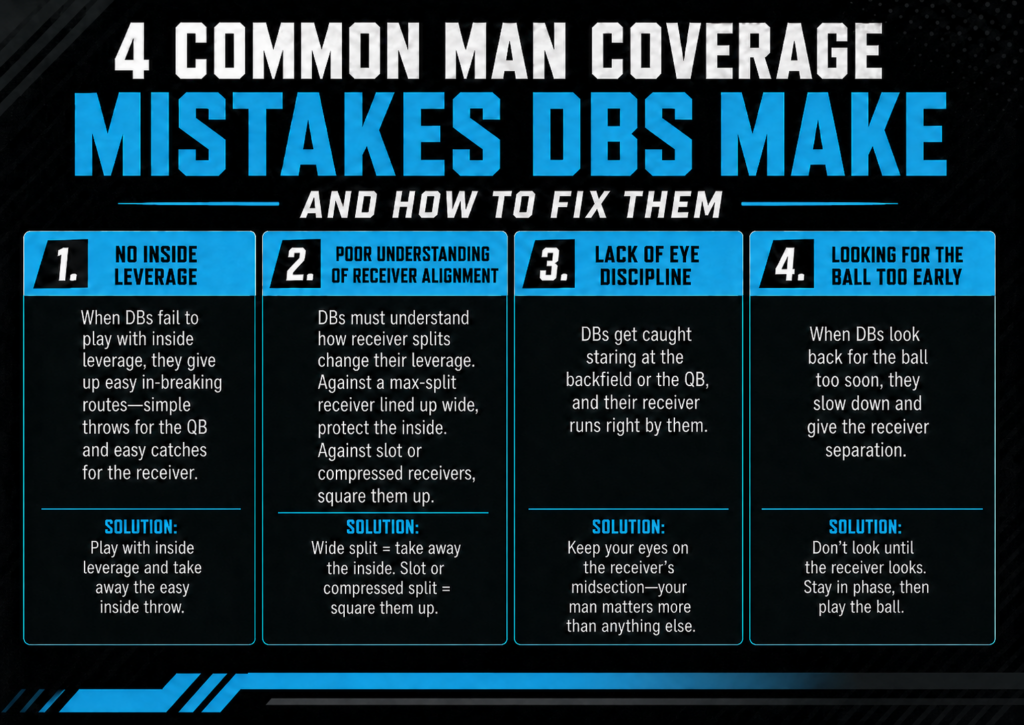
4 Common Mistakes That Defenders Make in Pass Coverage
1. No Inside Leverage
One of the biggest mistakes defensive backs make in man coverage is giving up inside leverage. When a DB allows a receiver to win inside, the offense has access to easy slants, drags, digs, and quick in-breaking routes. These are high-percentage throws that are tough to defend once the receiver has position.
In man coverage, the DB must understand where his help is and what routes he cannot give up. In most situations, especially with no safety help inside, the defender needs to protect the inside release and force the receiver outside. If the receiver wants to go inside, the DB must make that route difficult.
Coaching fix: Teach your DBs to align with inside leverage and take away the easiest throw first. Do not give the offense free access to the middle of the field. Make the receiver work to get open.
2. Poor Understanding of Receiver Alignment
DBs also need to understand how a receiver’s alignment changes the way they should play man coverage. Not every split is the same. A wide split, tight split, slot alignment, or compressed formation all tell the defender something different about the route possibilities.
For example, when a receiver is lined up wide, the DB must be ready to protect inside because the receiver has plenty of room to break toward the middle of the field. When a receiver is in a tight or compressed split, the defender may need to square him up and be ready for an outside release, crossing route, or rub concept.
Coaching fix: Teach your DBs to adjust their leverage based on the receiver’s split. Wide split means protect the inside. Tight or compressed split means square the receiver up and be ready to react.
3. Poor Eye Discipline
Bad eyes get defensive backs beat. A lot of young DBs want to look into the backfield, stare at the quarterback, or peek at the ball too soon. The second they take their eyes off their man, the receiver gains separation.
In man coverage, your man matters more than anything else. The DB must stay focused on the receiver’s hips and midsection. The receiver’s body will tell the defender where he is going. The quarterback’s eyes do not matter if the DB has already lost his man.
Coaching fix: Teach DBs to keep their eyes on the receiver’s midsection. Do not chase head fakes, shoulder fakes, or backfield action. Stay locked on the man and stay in phase.
4. Looking for the Ball Too Early
Another common mistake is looking back for the ball before the DB is in position. When a defensive back turns his head too early, he slows down. That gives the receiver separation and creates an easy throw for the quarterback.
DBs should not look for the ball until they are in phase with the receiver. If they are trailing, they need to keep running, close the gap, and play through the receiver’s hands. Looking back while out of position usually leads to separation, completions, or penalties.
Coaching fix: Teach your DBs this simple rule: stay in phase first, then find the football. If you are not in phase, play the receiver’s hands and finish the play.
Final Thoughts
Man coverage is not just about speed and athleticism. It is about technique, leverage, eyes, and discipline. A DB who understands alignment, protects leverage, keeps his eyes right, and stays in phase can compete against faster receivers.
The best defensive backs do not guess. They play with rules, technique, and confidence. Coach these four areas every week, and your man coverage will become much more consistent.